
01 Strategy
Product strategy for startups, from idea to a clear MVP scope
You have an early-stage idea and too many possible features. We turn it into a buildable MVP: what to build first, what to leave out, and why. AI agents do the research legwork; a senior designer makes every call.
What is product strategy for an early-stage startup?
Product strategy for an early-stage startup is the work of deciding what the first version of a product must do, for whom, and what it should leave out. It turns an idea into an MVP scope: a short, ranked list of features, the core user flows, and the criteria that say when each part is done. Good MVP scoping makes the first build smaller, clearer and easier to test.
It is the first step of our process, 01 Strategy, before 02 Design, 03 Development and 04 Measure & Optimise. The whole path is on from idea to build-ready.
What do we do?
- Research synthesis: we pull together what you already know, plus the market, into one picture.
- Competitive scan: what similar products offer, and where yours can stand apart.
- Jobs and personas: who the product is for and what they are trying to get done.
- MVP scope: what goes into the first version and, just as important, what stays out.
- Success criteria: how you will know the MVP is doing its job.
- The first flows: the core user journeys, written out step by step, ready for design.
How does AI-native product strategy work?
AI explores wide and fast. A designer decides. It is the same human-in-the-loop way we work across all our design work.
-
01
Map the field
AI agents synthesise research and scan competitors in days, not weeks.
Designer checks what is evidence and what is still an assumption.
-
02
Set the scope
AI drafts the long list of possible features.
Designer ranks every feature and sets the MVP scope.
-
03
Write it down
AI helps shape the brief and the flow specs.
Designer records each decision with its reason, so nobody has to guess later.
-
04
Hand over
AI turns each milestone into acceptance criteria.
Designer walks your team through the scope and the "not now" list.
What do you get?
- An MVP brief your team and your investors can read in one sitting.
- A ranked feature list, with a "not now" list of what was left out and why.
- A flow map of the core user journeys.
- Acceptance criteria per milestone, so design and development know when a part is done.
- A decision log: every call, with its reason.
From there we can test the riskiest flow as a clickable prototype or go straight into UI/UX design.
Example
From research to MVP brief for Lula
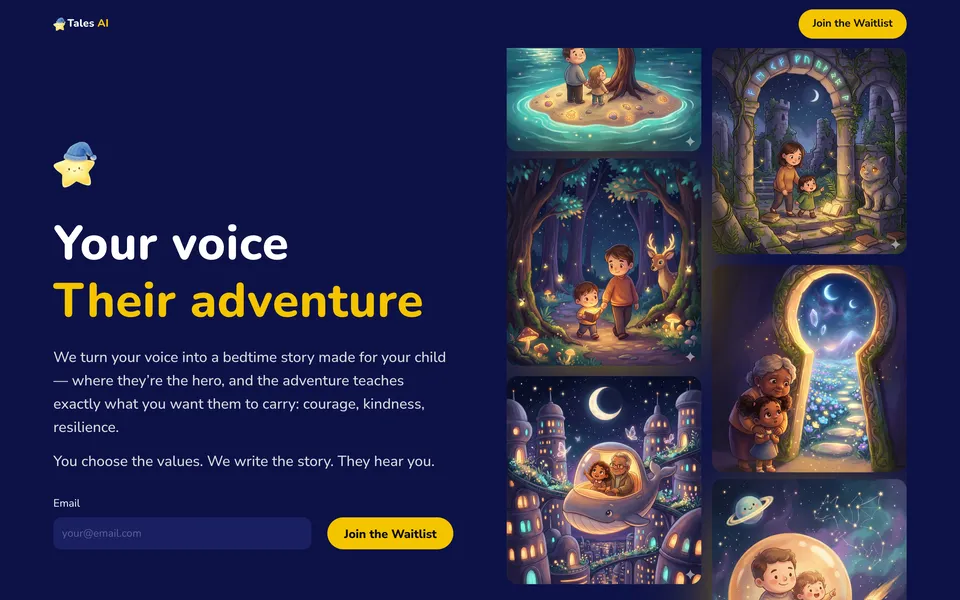
For Lula, an AI bedtime-story app, research synthesis to MVP brief took about a week. Our designer ranked 28 features and set the MVP scope. One decision shaped the product: the first personalised story comes before the paywall, so parents hear what they are paying for.
from research to the MVP brief
features ranked by our designer
user flows specced, from onboarding to profile
FAQs
How long does product strategy take?
It depends on scope. For Lula, research synthesis to MVP brief took about a week.
Do we need research first?
No. We start from what you have: notes, interviews, a pitch deck or just the idea. We say clearly which parts of the scope rest on evidence and which are assumptions to test.
What if we already have designs?
Good. We use them as input, check them against the MVP scope, and tell you what to keep, change or set aside for later.
Is this only for AI products?
No. AI-native describes how we work, not what you build. Any startup with an early-stage idea can use it.


Send us your messiest brief.
Senior design, sped up by AI, decided by people.