
Design engineering
Design that arrives as working code
We design in Figma and build in code, so the gap between the two never opens. For startups that want a landing page, a prototype or a front end that looks exactly like the design.
What is design engineering?
Design engineering is design and front-end code done by the same team. Instead of a Figma file that a developer interprets, you get the interface itself: built, responsive, animated and accessible, matching the design because it is the design.
It matters most where small details decide the result: a landing page that has to convert, an onboarding that has to feel right, a prototype investors will click through.
How we work
- Specs first. Each flow is written down as a short spec: what the screen is for, its states, its copy. Specs are what both people and AI agents read.
- Figma from the specs. We build Figma screens and components through Claude Code and the Figma MCP, on design tokens named the same as in code. A designer designs every screen and corrects every output.
- Prototypes in HTML. Clickable prototypes that behave like the product, not linked frames, so decisions get tested on real interactions.
- Production front ends in Next.js and Tailwind CSS, or plain HTML, CSS and JavaScript when that is all a page needs, with motion in GSAP or CSS.
- Checked before it ships. Token audits, accessibility checks and automated tests compare the build to the approved design.
Example
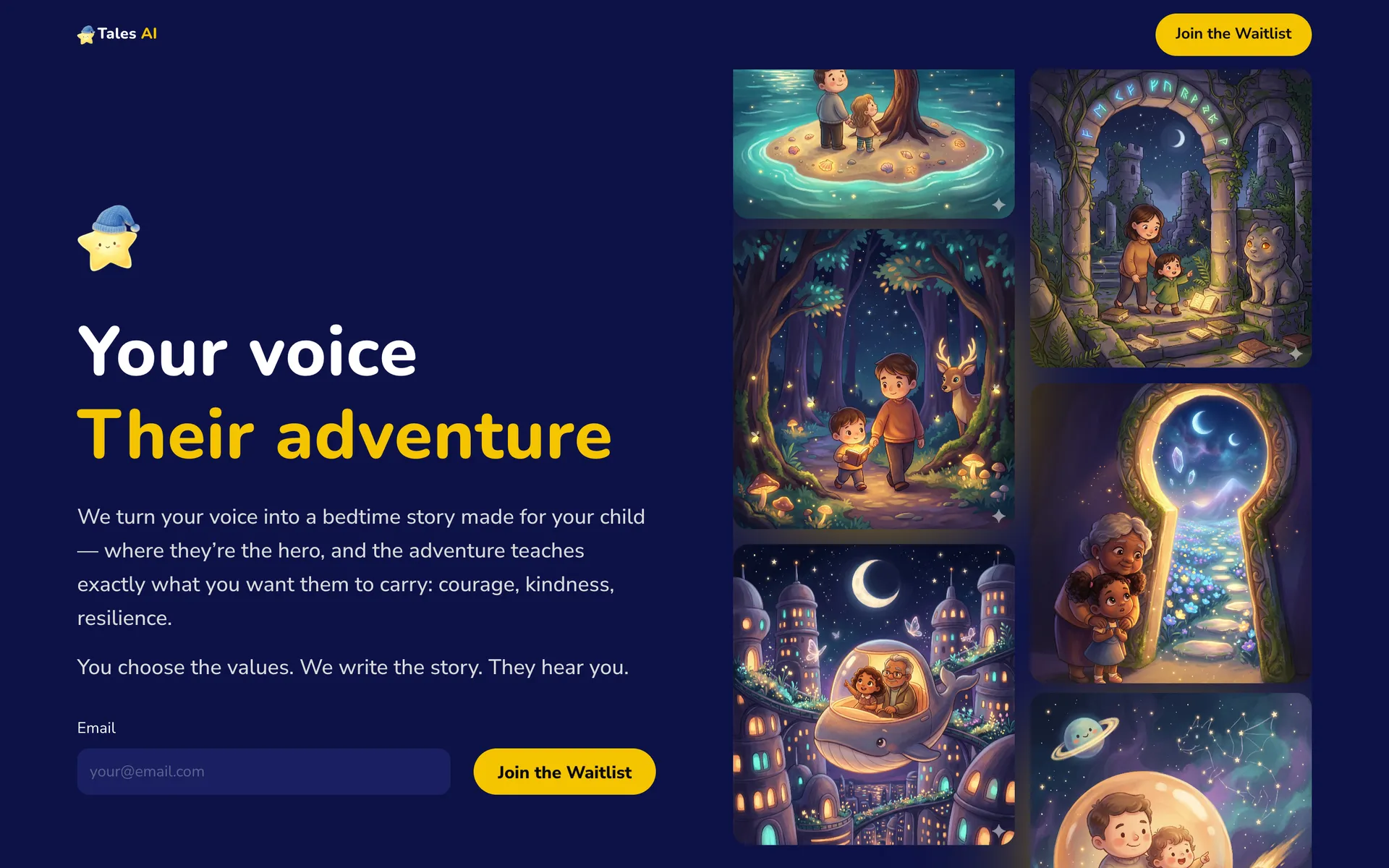
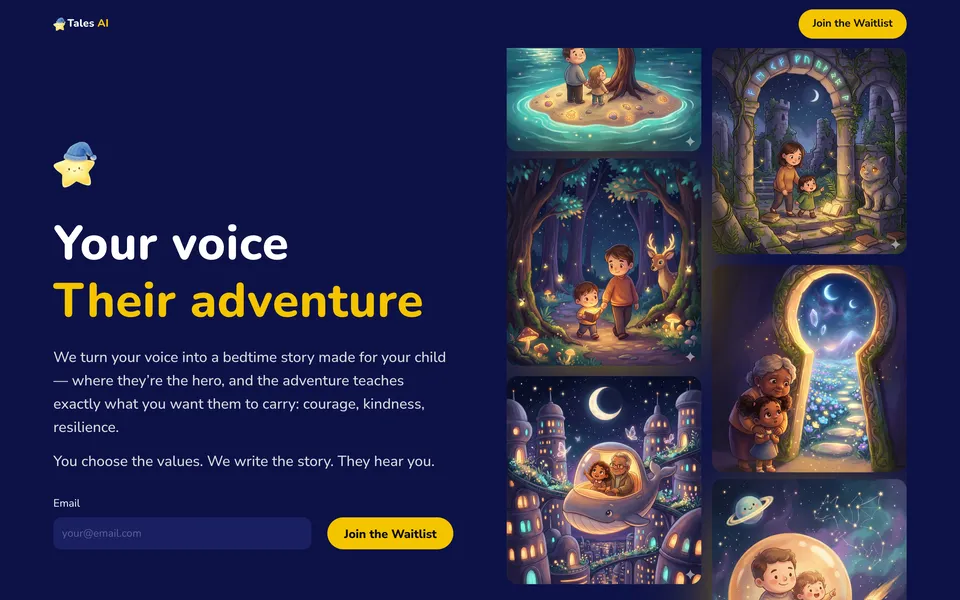
Tales AI landing page
A pre-launch waitlist page for an AI bedtime-story app, designed for conversion and built by us in Next.js, Tailwind CSS and GSAP. Read the case study.
Also built this way
- This website. Designed in Figma and built in plain HTML, CSS and JavaScript with Claude Code, no framework, with every animation tied to our motion rules. The code is public on GitHub.
- Lula. Three clickable HTML prototypes of the onboarding in about two weeks, then a Figma design system the client's developers built the app from.
- MONA AI. The splash animation, delivered as a ready React Native component.
FAQs
Do you replace our developers?
No. We build the parts where design and code meet: landing pages, prototypes, interfaces and motion. Your developers own the product's back end and architecture, and get front-end work they can merge rather than rebuild.
Which stack do you build in?
Next.js and Tailwind CSS for web apps and marketing sites, plain HTML, CSS and JavaScript for light pages, and GSAP or CSS for motion. For mobile, we hand off specs, tokens and components ready for your React Native or native developers.
Can you work in our repo and our Cursor setup?
Yes. We work on a branch in your repository, follow your conventions, and write specs and tokens your developers can use directly in Cursor.


Send us your messiest brief.
Senior design, sped up by AI, decided by people.