
Case study · Mobile app
Lula: an AI app that feels hand-made
A new bedtime story every night, starring your child and read in your voice. We designed it end to end, from research to the design system the app was built from.
- Client
- Horus Studios
- Our role
- End-to-end UI/UX design
- Platform
- iOS
- Status
- On the App Store since September 2026
The problem
AI bedtime-story apps are a crowded category. Most offer personalised stories, many offer a cloned parent's voice. The feature list was never going to set this one apart, so the first two minutes had to.
Two things stood in the way. Parents can't judge a story app until they hear a story, so a paywall before that point asks for trust the app hasn't earned. And parents are wary of AI content for small children: anything that looks machine-made loses them.
What we did
We were the product designer end to end: research synthesis, the MVP brief, brand guidelines, information architecture, six specced flows (onboarding, discover, listen, story generation, paywall, profile), wireframes, HTML prototypes, and the Figma design system and screens.
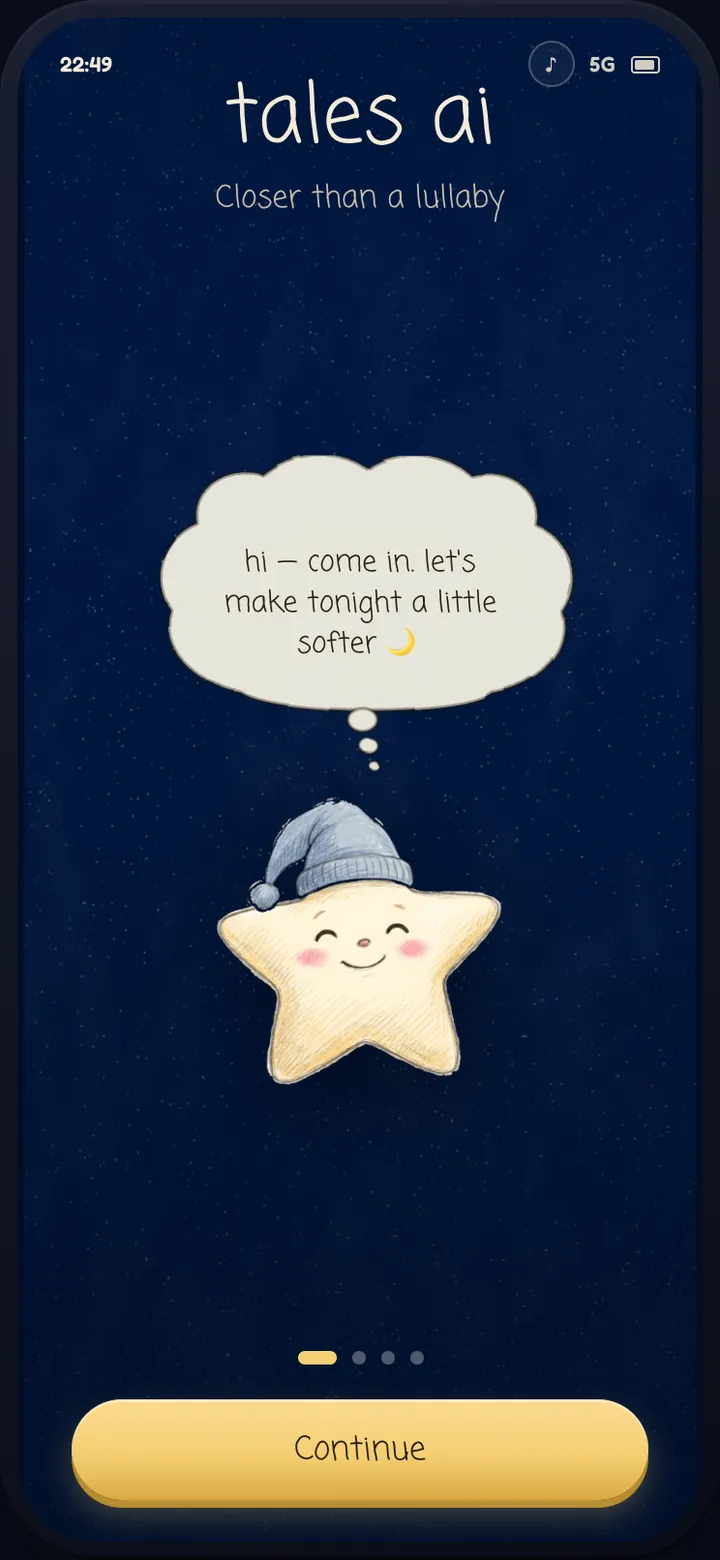
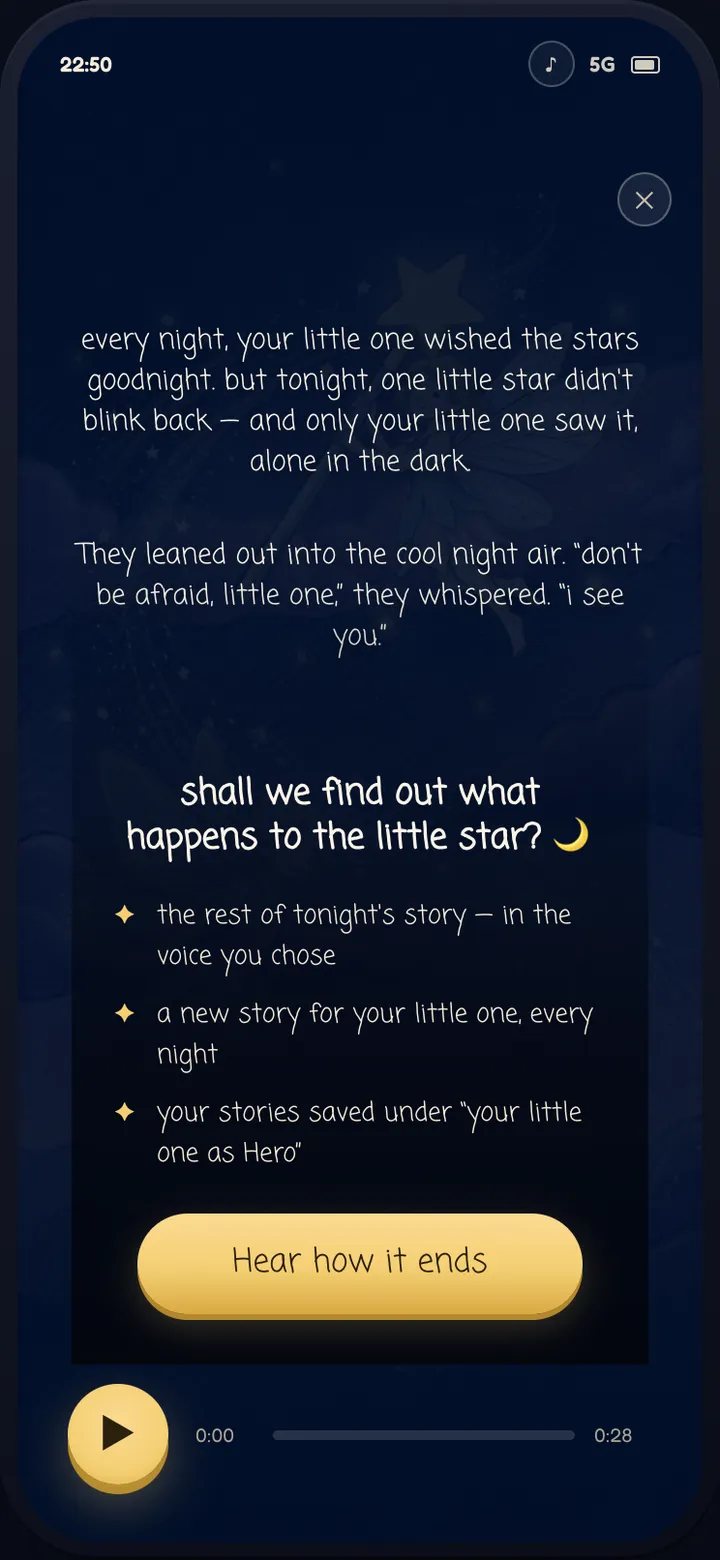
- The first story comes before the paywall. Onboarding generates a personalised story, and the read-along cuts to the paywall at the best part: "Hear how it ends". The paywall becomes the payoff of a promise, not a surprise upsell.
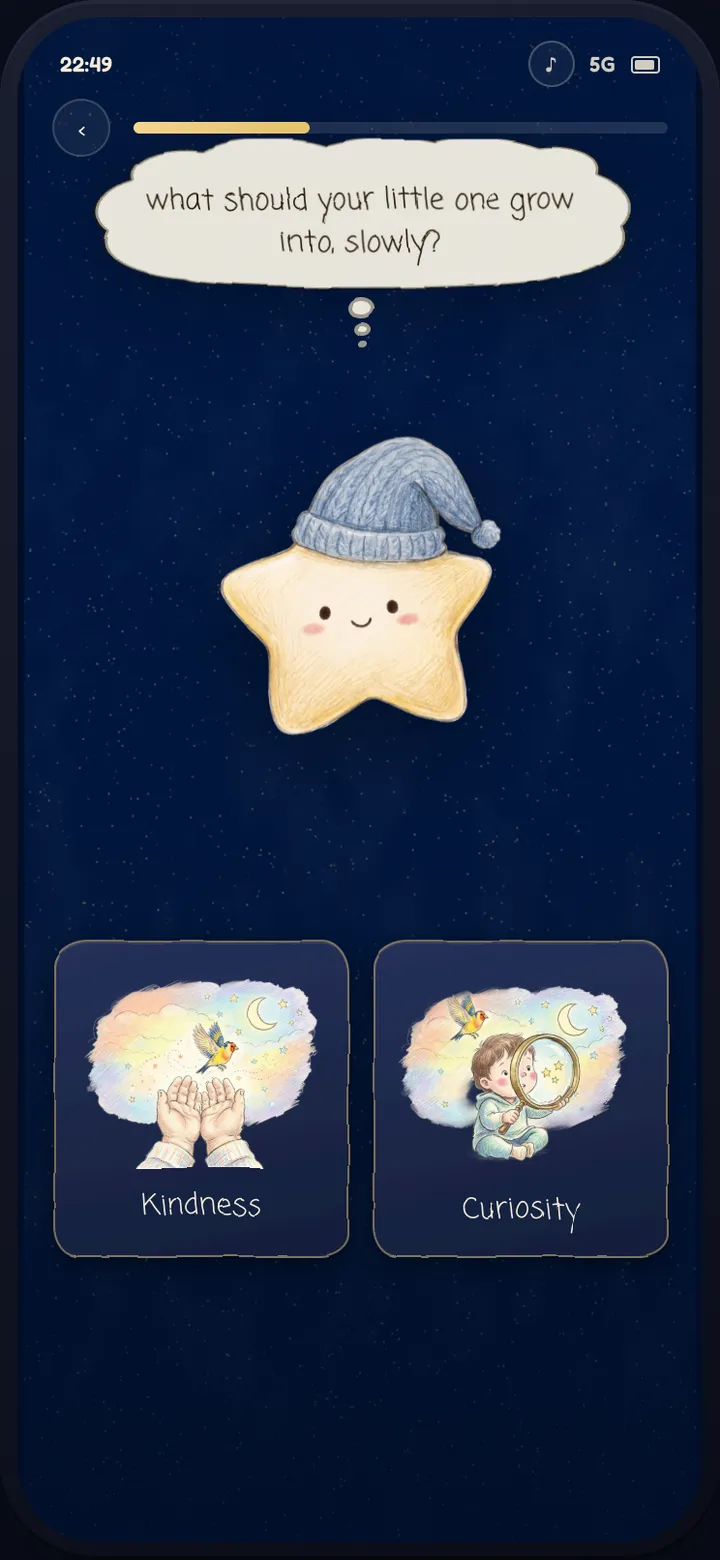
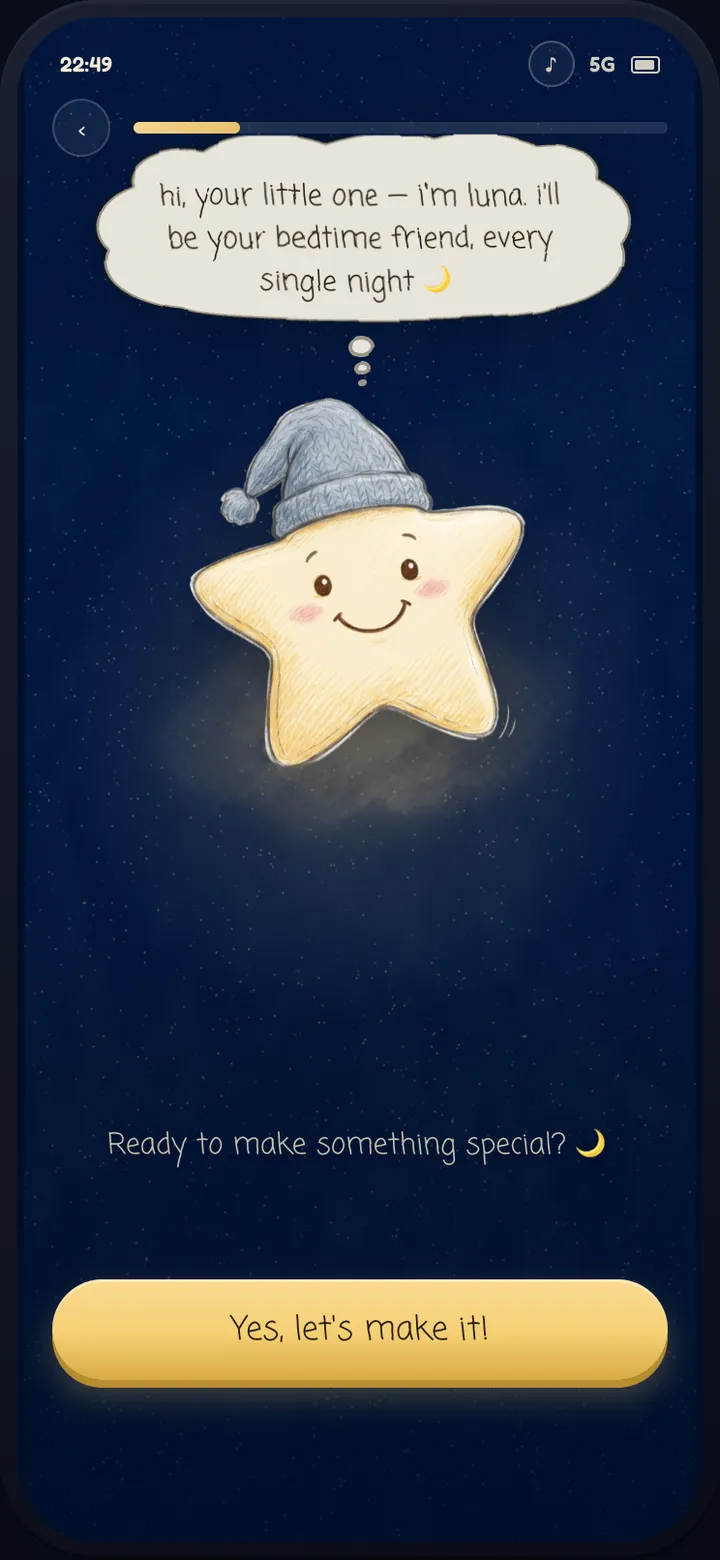
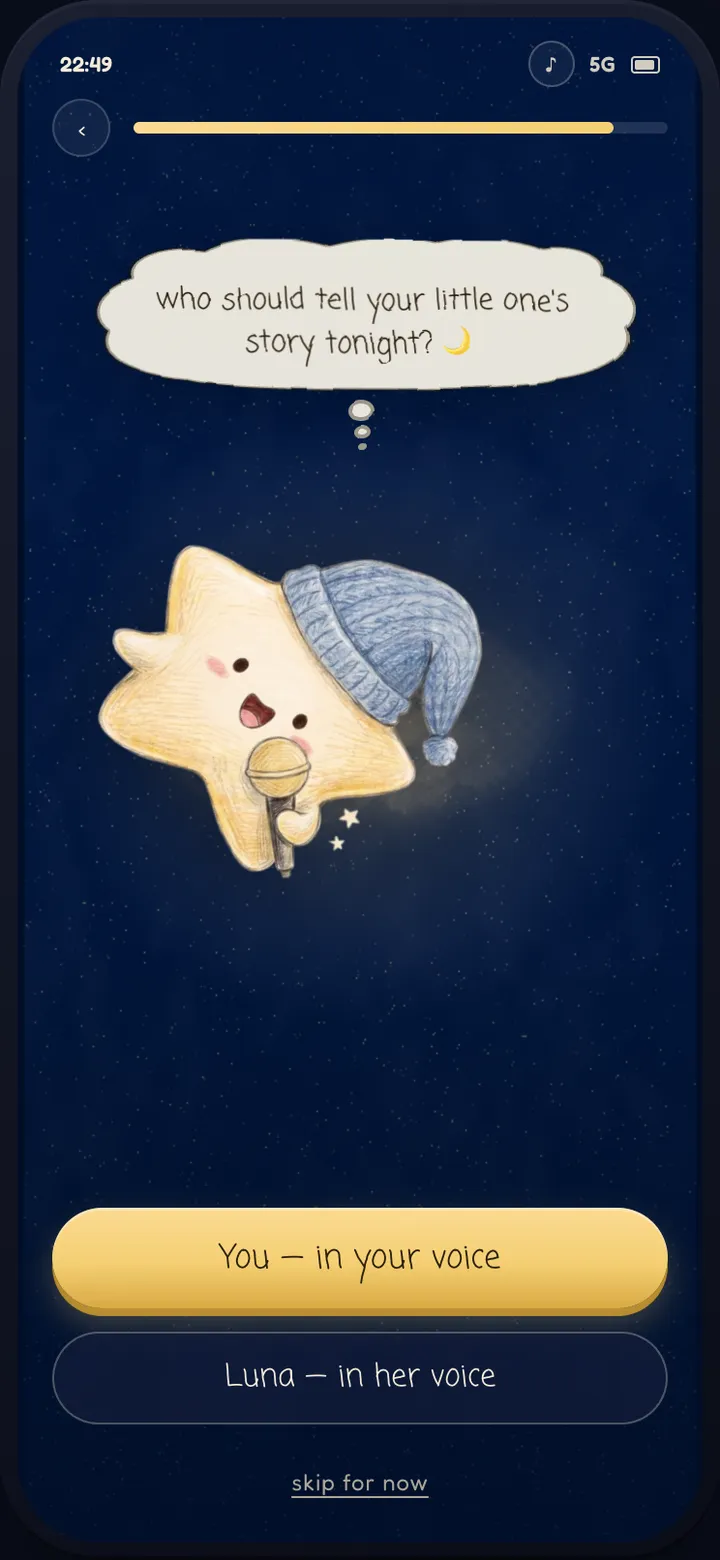
- Setup that feels like making something. Luna reacts to every answer, and every answer becomes a story input, so setup feels like making a gift for your child rather than filling in a form.
- Parents stay in control. A parent approves the story script before narration runs, so they decide what the AI tells their child.
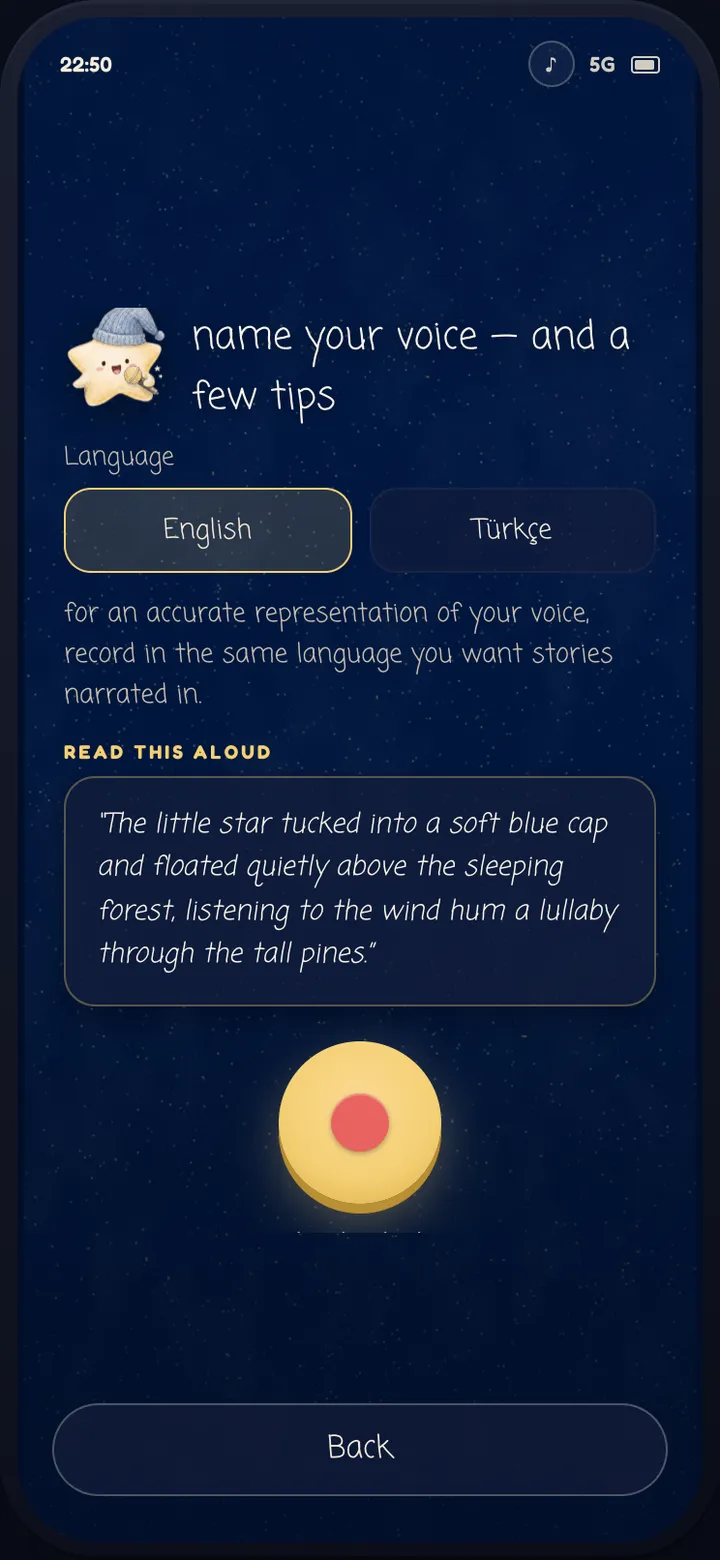
- No dead end while the voice is cloned. The wait stays inside onboarding, with Luna keeping company.
- A hand-made look. One coloured-pencil illustration style for Luna and every scene, chosen to make an AI product feel warm and human.
Onboarding went through three versions in about two weeks. After an internal review of version one, we reworked eleven points, each decided by our designer, which led to the read-along paywall in version three.
The work in numbers
user flows specced, from onboarding to profile
design tokens (Figma variables) in the design system
component variants across 17 atoms, plus 13 molecules
clickable onboarding prototypes in about two weeks
Where AI helped
- Research to brief in a week. An AI research workflow synthesised the market, competitors and personas; Claude Code helped shape the MVP brief. Our designer ranked 28 features and set the MVP scope.
- Illustration with Nano Banana (Gemini). About 12 Luna poses, scenes and cards, all generated image-to-image from one approved base, so the style never drifts. Our designer picked from candidates and approved every asset.
- Asset QA with Claude Code. An automated transparency check caught two overlays with baked-in checkerboard backgrounds before they reached the app.
- Figma built through Claude Code and the Figma MCP, from the written flow specs. Our designer designed every screen, reviewed the output and corrected it.
See how this works on every project: how we design with AI.
What came out of it
The client's developers built the app straight from the Figma file, with the version-three onboarding, and Lula has been on the App Store since September 2026.
It is designed to feel hand-made in a crowded AI category, to let parents hear a story starring their child before they pay, and to keep parents in charge of what the AI tells their children.
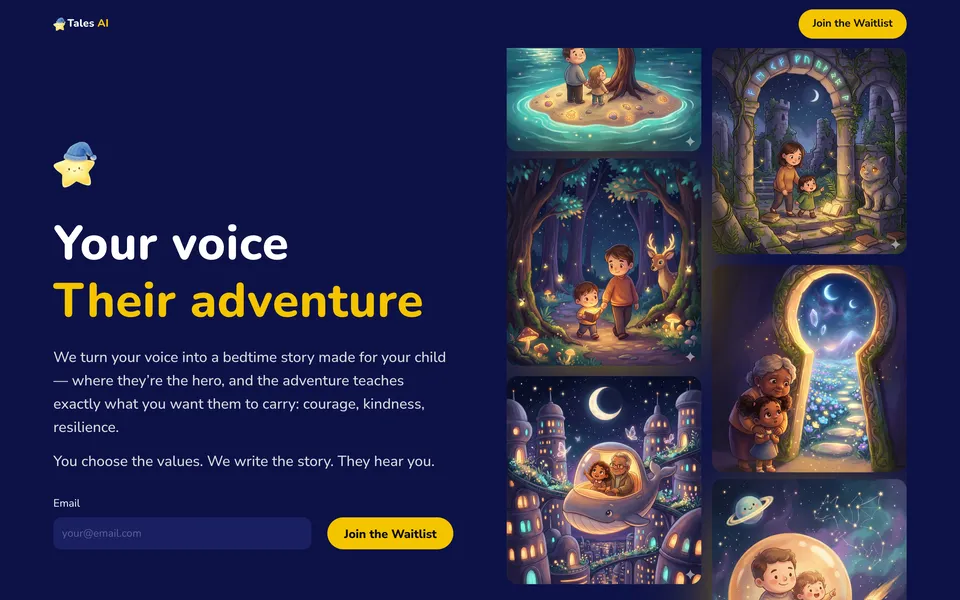
Before the app, we also designed and built its pre-launch waitlist page: see the Tales AI landing page.

Send us your messiest brief.
Senior design, sped up by AI, decided by people.