
AI-native product design sprint
From idea to a build-ready product, in one sprint
A fixed-scope product design sprint for startups and founders. In three to six weeks we turn an early-stage idea into a design your developers can build from.
- Length
- 3 to 6 weeks
- Scope
- Fixed, agreed before we start
- For
- Startups and founders
- Ends with
- A build-ready Figma file and handoff
What is the sprint?
An MVP design sprint is a short, fixed-scope engagement that takes a product idea from a brief to a design that is ready to build. Ours runs for three to six weeks and ends with a token-strict Figma file, a clickable prototype and handoff docs your developers can use in Cursor.
It is AI-native: AI explores wide and fast, and senior designers make every call. The aim is better product decisions, not more screens. Read more about how we design with AI.
What can one sprint cover?
An MVP design, one product section such as onboarding, a dashboard or settings, a multi-screen feature flow, or the foundation of a design system. We agree the scope on the first call, so you know what you will get before we start.
Is it right for you?
A good fit if you
- Have an early-stage idea and need it designed before you build.
- Have developers, or will soon, and want a file they can build from.
- Need senior product design quickly, without hiring a full team.
- Want a fixed scope and a clear end point.
Not the right fit if you
- Mainly need a logo or a brand identity.
- Need marketing copy written.
- Want an open-ended design team for months. That is ongoing work, not a sprint.
What happens during the sprint?
The same four steps we use on every project, sized to your scope.
-
01
Strategy
We turn your brief into a clear MVP scope: what to build first, and why. See product strategy.
-
02
Design
AI explores many directions fast. We choose one, with the reasons written down, then run UX, UI and prototyping in one loop, with QA before handoff.
-
03
Development
A token-strict Figma file, component specs and Cursor-ready handoff docs, walked through with your developers.
-
04
Measure & Optimise
A round of questions and answers with your developers after handoff, and a review of what to improve next.
What do you get at the end?
- A build-ready Figma file on design tokens, named the same as in your code.
- A component library with spec sheets your developers and their AI tools can read.
- A clickable prototype of the key flows.
- Cursor-ready handoff docs and a Loom walkthrough for your developers.
- A decision log, so the reasons behind the design outlive the sprint.
- One Q&A round with your developers after handoff.
What is not included?
- Logo and brand identity work.
- Marketing copy.
- User research, such as interviews. We can add it to the sprint.
- Ongoing iteration after delivery. That continues as ongoing work if you want it.
Example
Lula: from research to the App Store
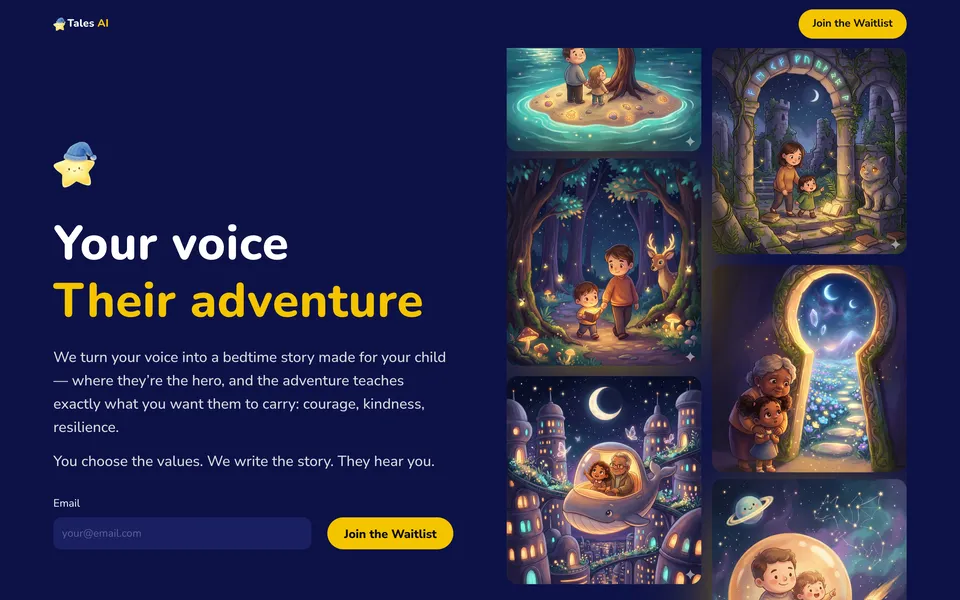
For Lula, an AI bedtime-story app, we went from research to an MVP brief in about a week. The client's developers built the app from our Figma file, and it has been on the App Store since September 2026.
specced flows, from onboarding to profile
clickable onboarding prototypes in about two weeks
design tokens as Figma variables
How do we start?
Book a call and bring the brief, however messy. If we are a fit, you get time, budget and milestone estimates, then a small demo task before anything is signed.
FAQs
How long is the sprint?
Three to six weeks, depending on the scope we agree on the first call. One product section is shorter than a full MVP.
What do we need to have ready?
Your idea and whatever you already have: notes, a deck, competitors you admire, an old Figma file. A messy brief is fine. Strategy is the first step of the sprint.
What happens after the sprint?
Your developers build from the file, with one Q&A round from us. If you want us to keep designing as the product grows, we can continue with ongoing iteration.
Can you also build it?
The sprint ends with a build-ready design for your developers. If you need more, see design engineering.


Send us your messiest brief.
Senior design, sped up by AI, decided by people.