
Case study · Website, SEO and GEO
A studio website built to be found
The site you are reading. Designed in Figma, built by hand in plain HTML, CSS and JavaScript with Claude Code, and set up so that both Google and AI answer engines can find it, read it and quote it.
- Client
- Libre Studio (our own site)
- Our role
- Design, build, motion, SEO and GEO
- Built with
- HTML, CSS, JavaScript, Claude Code, Netlify
- Code
- On GitHub

The problem
The studio's domain only carried email. We needed a site that does three jobs at once: show the work to founders, recruit senior freelance designers, and stand up to a careful reader of privacy law, since candidates send personal data.
And we wanted it found. Not only by Google, but by the AI tools founders now ask first: ChatGPT, Perplexity, Claude, Gemini and Copilot.
What we did
- One design system, Figma to code. Colours, type, spacing and radius come straight from the Figma variables. Where a colour pair failed WCAG AA contrast, we changed it.
- Motion with a job. Headlines rise word by word, one hand-drawn mark draws on per page, service columns rise like bars. With reduced motion on, everything simply appears.
- A light showreel. A 145 MB master became a 2.9 MB silent loop for the hero, with the full version loading only when someone presses play.
- Private by default. Self-hosted fonts and video, analytics only after opt-in consent, no cookies before it, and a strict content security policy. Privacy notices in English and Turkish under KVKK.
- A build that refuses mistakes. A short Node script assembles the pages and fails on any broken internal link or anchor, so a typo can never go live.
The site in numbers
third-party requests until you accept analytics
frameworks or dependencies to maintain
hero showreel loop, down from a 145 MB master
pages, each with its own structured data
What is SEO and GEO?
SEO, search engine optimisation, helps a site rank in Google and Bing. GEO, generative engine optimisation, helps it get named and quoted when someone asks an AI tool instead. They overlap, but GEO rewards different things: clear answers to specific questions, specific facts, and the same description of you repeated across the web.
How we set it up
- Structured data on every page: the studio, its founder, services, projects, the showreel as a video, and FAQs read straight from the visible text, so the markup can never say more than the page. It passes Google's Rich Results Test.
- An llms.txt file that summarises the studio and its pages for AI crawlers, and a robots.txt that welcomes Google, Bing, ChatGPT, Claude, Perplexity and Apple by name.
- IndexNow: every deploy tells Bing, and the AI tools that read its index, which pages exist.
- Google Search Console and Bing Webmaster Tools, with a sitemap that carries a last-updated date per page and links each English legal page to its Turkish twin.
- Pages shaped like answers. Headings phrased as the questions people ask, a quotable definition near the top, and case studies with specific facts instead of adjectives.
Where AI helped
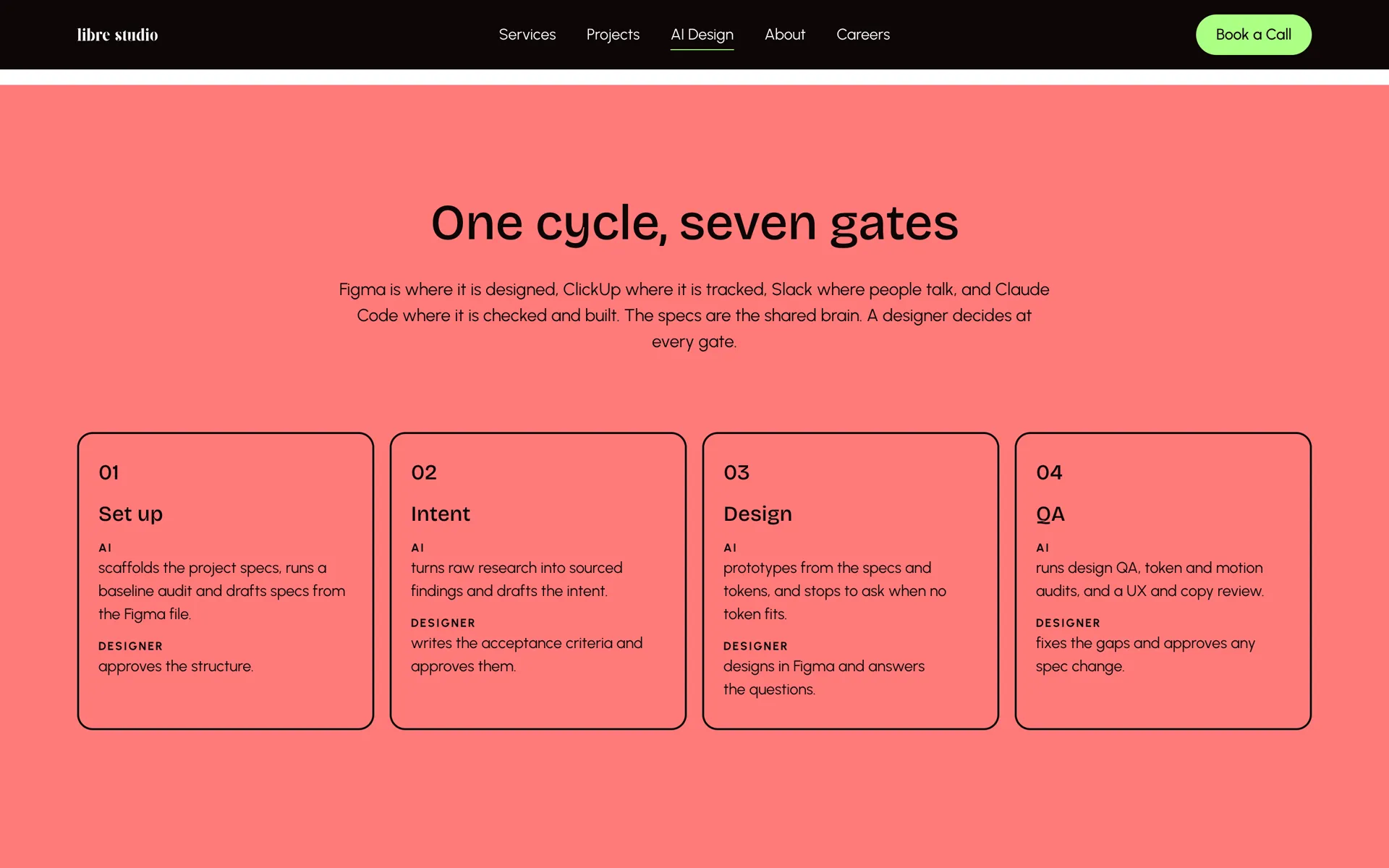
- Claude Code read the Figma design through the Figma MCP, wrote the templates and the build checks, and ran browser tests at desktop and phone sizes before every release.
- Agents in parallel. Several pages were drafted by separate agents at the same time, each from its own source files, then reviewed and merged by a designer.
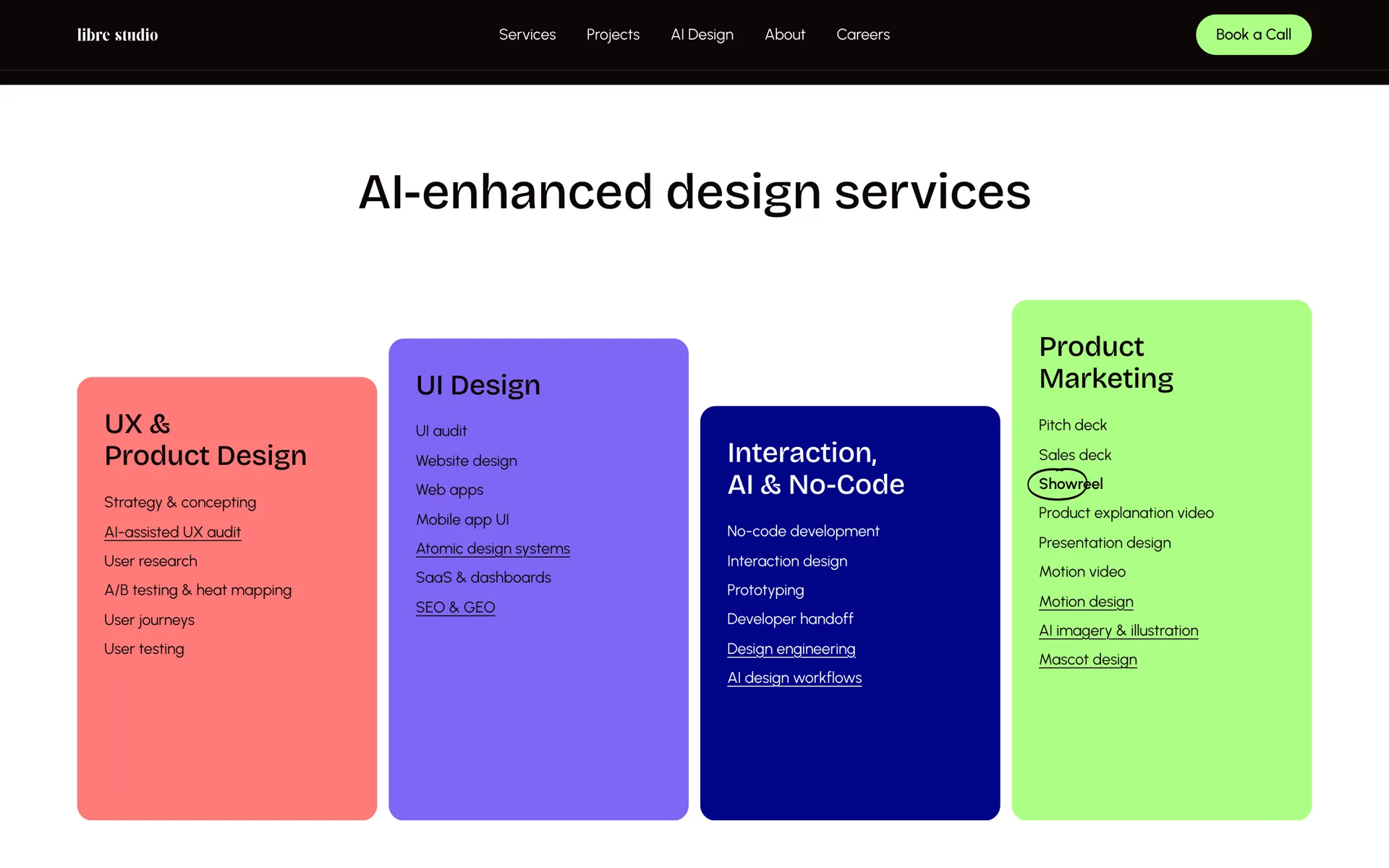
- A designer made every call: the copy, the positioning, what to show and what to leave out. See how we design with AI.
FAQs
Can you do SEO and GEO for our site?
Yes, as part of a website project or on its own: structured data, llms.txt, crawler rules, sitemaps, Search Console and Bing setup, and page copy shaped to answer the questions your buyers ask.
Why no framework?
A studio site is mostly words and images. Plain HTML, CSS and JavaScript load fast, never need upgrading and are easy for search engines and AI crawlers to read. For products, we build in Next.js. See design engineering.
Is the code public?
Yes, on GitHub. The copy, brand assets, showreel and project images remain ours.


Send us your messiest brief.
Senior design, sped up by AI, decided by people.